
Framing Costs in 2025: Lumber Pricing and Structural Construction Guide
Framing costs $7-$16 per square foot, with lumber prices stabilizing after 2021-2022 volatility. Learn what affects structural framing costs for your building project.
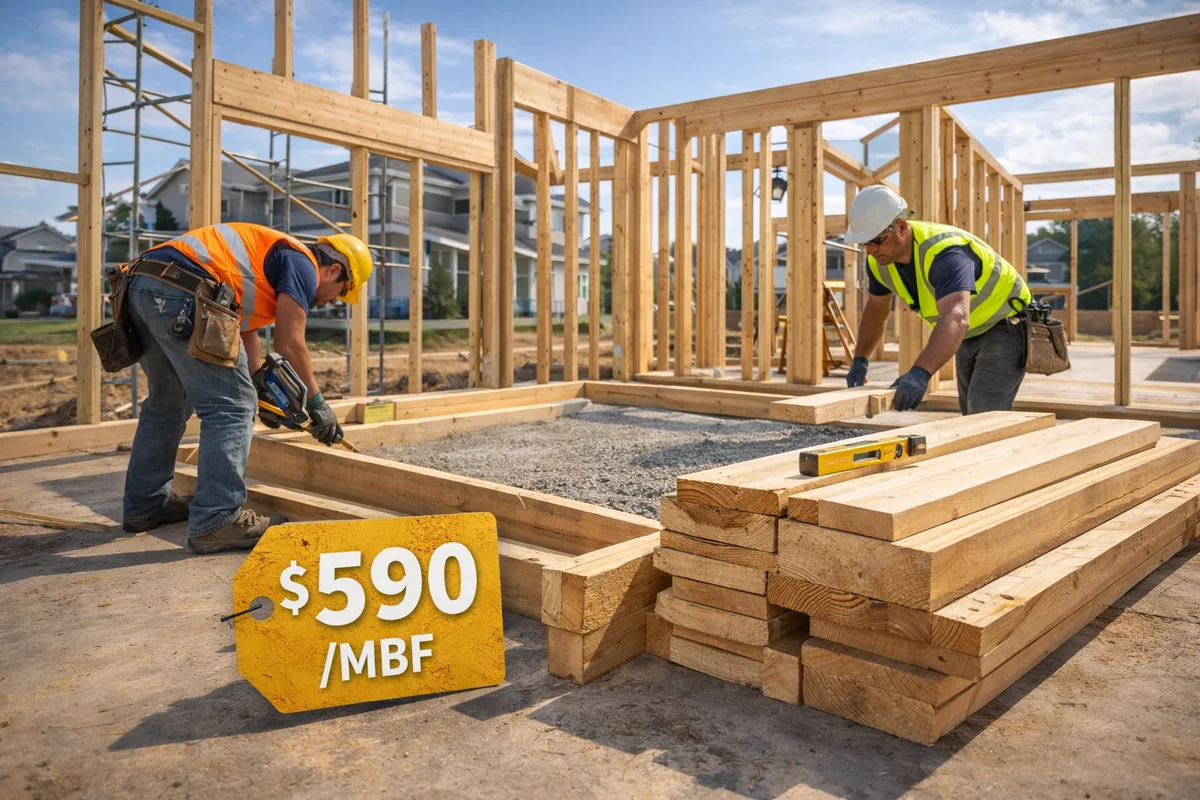
Framing Costs in 2025: A Professional Estimator's Complete Guide
Framing is the structural skeleton of every building — and consistently one of the three largest cost line items in new construction and major additions. After the historic lumber price spike of 2021–2022 (Random Length Framing Lumber futures hit $1,711/MBF in May 2021), markets have normalized. But "normalized" still means 35–45% above pre-pandemic 2019 baselines. If you're estimating a project using pre-2020 numbers, you are underestimating.
This guide gives you the actual 2025 numbers, the professional methodology for calculating them, and the regional breakdowns you need to produce a defensible estimate.
What Does Framing Cost in 2025?
Installed cost — materials plus labor, per square foot of floor area:
| Project Type | Low | Typical | High |
|---|---|---|---|
| Single-family new construction | $7.00 | $10.50 | $16.oo |
| Room addition (ground floor) | $9.00 | $13.00 | $18.00 |
| Second-story addition | $12.00 | $16.50 | $22.00 |
| Garage (wood frame) | $6.00 | $8.50 | $12.00 |
| Commercial light-frame (Type V) | $11.00 | $15.00 | $21.00 |
Source: RSMeans 2025 Building Construction Cost Data, adjusted for current lumber market pricing.
These are installed costs — lumber delivered and framed in place, including plates, blocking, headers, sheathing fasteners, and labor. They do not include foundation, roofing, windows, or rough MEP.
What's driving the 2025 numbers:
- Framing lumber (2×4, 2×6 SPF): $0.58–$0.78 per linear foot
- Engineered lumber (LVL): $4.20–$6.80 per linear foot depending on depth
- Framing labor: $1.85–$4.50 per square foot depending on region and complexity
- Sheathing (7/16" OSB): $24–$38 per sheet (4×8)
Regional Framing Cost Breakdown by State (2025)
Labor markets drive more regional variation than materials. A framing crew in rural Mississippi costs roughly half what the same crew costs in San Francisco. Here's what you're actually looking at:
| State | Installed $/SF | Labor Rate/HR | Notes |
|---|---|---|---|
| California (Bay Area) | $16–$22 | $72–$95 | Prevailing wage on most projects |
| California (Inland) | $12–$17 | $55–$72 | |
| New York (NYC metro) | $15–$21 | $68–$90 | Union scale on commercial |
| Texas | $8–$12 | $38–$52 | Strong supply of framing crews |
| Florida | $9–$13 | $40–$55 | Hurricane strapping adds 5–8% |
| Illinois (Chicago) | $12–$16 | $58–$78 | |
| Georgia | $8–$11 | $36–$48 | |
| North Carolina | $8–$12 | $37–$50 | |
| Arizona | $9–$13 | $42–$56 | |
| Pennsylvania | $10–$14 | $48–$64 | |
| Washington | $12–$17 | $58–$76 | |
| Colorado | $11–$15 | $52–$68 | |
| Colorado | $11–$15 | $52–$68 | |
| Midwest (avg) | $8–$12 | $38–$52 | OH, IN, MI, MN, WI |
| Southeast (avg) | $7–$11 | $34–$46 | AL, MS, AR, TN, SC |
Labor rates reflect journeyman framing carpenter wages. Foreman and superintendent rates add 15–25%.
How to Calculate Framing Materials — The Professional Method
Generic "square footage" rules produce estimates accurate to ±30%. That's fine for a ballpark but not for a bid or a budget you'll defend to a client. Here's how professional estimators do it.
Step 1: Calculate Wall Linear Footage
Add the perimeter of all exterior walls plus all interior partition walls. For a 2,000 SF single-story rectangle (40×50 ft) with typical interior layout:
- Exterior perimeter: (40+50) × 2 = 180 LF
- Interior partitions (estimate 1.2× exterior for typical plan): ~216 LF
- Total wall LF: ~396 LF
Step 2: Calculate Stud Count
Standard 16" on-center framing:
Wall LF × 0.75 = base stud count Add 15% for corners, intersections, cripples, and waste
Example: 396 LF × 0.75 = 297 studs + 15% = 342 studs (2×4×8')
At $4.85/stud (2025 market): $1,659 in wall studs
Step 3: Calculate Plates
Each wall needs 3 plates (bottom + double top). At 8' stud spacing:
Total wall LF × 3 = plate linear footage 396 LF × 3 = 1,188 LF of plate material (2×4) At $0.62/LF: $737 in plates
Step 4: Headers for Openings
This is where estimates go wrong. Every door and window requires a header. Size is determined by span:
| Opening Span | Header Size | Installed Cost (material only) |
|---|---|---|
| Up to 3' (door) | Double 2×6 | $18–$28 |
| 3'–5' (window) | Double 2×8 | $28–$42 |
| 5'–8' (large window) | Double 2×10 | $40–$65 |
| 5'–8' (large window) | Double 2×10 | $40–$65 |
| 8'–12' (garage door) | LVL beam | $180–$380 |
| 12'+ (opening) | Engineered beam, requires calc | $400–$900+ |
For a typical 2,000 SF home: 12–16 windows, 8–10 doors, 1–2 garage doors. Estimated header material cost: $800–$1,400
Step 5: Floor and Roof Framing
Floor joists and roof rafters or trusses are typically estimated separately:
- Floor joists (2×10, 16" OC): $2.80–$3.60/SF of floor area
- Prefab roof trusses: $3.50–$5.50/SF of roof footprint (most efficient)
- Stick-framed roof: $5.00–$9.00/SF (complex designs, additions)
Worked Full Estimate Example
Project: 500 SF master bedroom addition, single story, simple rectangular plan, North Carolina
| Line Item | Calculation | Cost |
|---|---|---|
| Wall Studs | 120 LF × 0.75 × 1.15 = 104 studs × $4.85 | $504 |
| Plates | 120 LF × 3 = 360 LF × $0.62 | $223 |
| Headers | 120 LF × 3 = 360 LF × $0.62 | $223 |
| Sheathing (OSB) | 500 SF + 15% waste = 22 sheets × $31 | $682 |
| Floor Joists | 500 SF × $3.20 | $1,600 |
| Roof trusses | 500 SF × $4.25 | $2,125 |
| Misc hardware | Straps, hangers, fasteners | $380 |
| Total materials | $5,656 | |
| Labor (NC rate: $44/hr, 3-man crew, 5 days) | 3 × $44 × 40 hrs | $5,280 |
| TOTAL INSTALLED | $10,936 | |
| Per SF | $10,936 ÷ 500 SF | $21.87/SF |
This falls at the high end of the range for North Carolina because additions carry a labor premium over new construction — crews spend more time working around existing structure, tying into existing framing, and making the new work match the old.
→ Use the Free Framing Cost Calculator to run this calculation for your exact dimensions and state.
Estimate Your Framing Costs by State
Try Framing Calculator →What Drives Cost Overruns in Framing
From a project management standpoint, framing budgets break down in predictable ways. Here's what to watch:
Design changes after framing begins. Moving a wall or adding a window opening after lumber is cut and installed is expensive — material is wasted, labor doubles back, and the schedule slips. Lock your floor plans before the crew mobilizes.
Lumber quality rejection. On major projects, expect to reject 5–12% of delivered lumber — excessive warp, large knots at critical locations, or moisture content above 19%. Budget for it rather than being surprised. Inspect deliveries before the crew starts cutting.
Header undersizing. A common mistake on self-managed projects. Undersized headers over large openings cause long-term sagging and are a code violation. When in doubt, go one size up — the cost difference between a double 2×10 and double 2×12 is under $20. The cost to fix it later is measured in thousands.
Missed blocking requirements. Fire blocking (required at each floor level in stud cavities), shear panel blocking, and bridging between joists are frequently missed on budget projects. They're not optional — they're code, and inspectors look for them. Add them to your estimate line items explicitly.
Crew inefficiency on complex geometry. Cathedral ceilings, hip roofs, and irregular floor plans can increase framing labor by 40–80% over a simple rectangle. If your plan has significant complexity, get a unit-price quote from your framer, not a lump sum — lump sums on complex work almost always lead to disputes.
Lumber Grades and Species: What to Specify
The species and grade you specify affects both cost and structural performance.
For standard wall framing:
- #2 SPF (Spruce-Pine-Fir) — the industry default. Cost-effective, widely available, adequate for most residential applications. Current price: $0.58–$0.68/LF for 2×4.
For longer spans and higher loads:
- #2 Douglas Fir — higher modulus of elasticity (stiffer), better performance at longer spans, required in some seismic zone applications. Premium of 8–15% over SPF.
- Southern Yellow Pine (SYP) — common in the Southeast, excellent fastener holding strength, used extensively for decks and treated applications. Similar pricing to Douglas Fir.
When to specify engineered lumber:
- LVL (Laminated Veneer Lumber): Headers, beams, ridge beams. Consistent quality, no crowns or warps. Required for spans over 12' in most jurisdictions.
- I-joists: Floor systems, especially long spans. More efficient than solid lumber, but require blocking at bearing points and special handling at penetrations.
- Glulam: Architectural beams, exposed ridge beams. Premium product at premium pricing — budget $8–$18/LF.
One field note: Wet lumber causes callbacks. Framing installed at moisture content above 19% will shrink and twist as it dries — cracking drywall, racking doors, and warping floors. If your lumber delivery looks or feels wet, test it. Moisture meters cost $25. Using them saves thousands.
Permits, Inspections, and Structural Requirements
All structural framing requires a permit in every US jurisdiction. No exceptions — and pulling permits protects you as much as it protects the owner.
What inspectors look for at framing inspection:
- All headers properly sized and bearing on jack studs
- Shear panels installed and nailed per the nailing schedule on the approved plans
- Hold-downs and straps at specified locations
- Fire blocking continuous at each floor level
- Joist hangers installed and nailed with specified hanger nails (not common nails)
- Stairway framing per IRC requirements
Engineering requirements vary by location. High-wind zones (coastal FL, TX Gulf Coast, Carolinas), seismic zones (CA, PNW, Intermountain West), and high-snow-load areas (mountain states, upper Midwest) require additional engineering — closer stud spacing, larger members, more hardware. In California and Washington, a structural engineer stamp is effectively standard on anything beyond a simple room addition. Budget $1,500–$4,500 for structural engineering on a typical residential project in these markets.
Frequently Asked Questions
What does framing labor cost per hour in 2025? Journeyman framing carpenters earn $34–$55/hour depending on region, with foremen at $48–$72/hour. In union markets (Chicago, NYC, Bay Area, Pacific Northwest), expect $65–$95/hour all-in with benefits. Most framing crews work on production rates, not hourly — expect to negotiate a per-square-foot or per-unit price for most residential work.
How long does framing take for a 2,000 SF house? A 3-man professional framing crew typically completes a 2,000–2,500 SF single-story home in 10–15 working days. Two stories adds 4–6 days. Complex geometry, vaulted ceilings, and steel beam work extend the schedule. DIY framers with relevant experience should double these estimates.
Should I use a framing contractor or a general contractor for this work? For new construction and major additions, a framing subcontractor hired by your GC is standard practice. On smaller additions, some GCs self-perform framing. Either way, verify that whoever frames your project pulls the permit in their name — it means they're accountable for the inspection passing.
How do I know if a framing bid is reasonable? Divide the total bid by the square footage of floor area being framed. In most U.S. markets, installed framing should fall between $8–$16/SF. Numbers below $7/SF suggest the crew is inexperienced, cutting corners on materials, or planning to request change orders. Numbers above $18/SF in non-premium markets warrant a competing bid.
What's the difference between load-bearing and partition walls? Load-bearing walls transfer roof and upper-floor loads down to the foundation. Removing one requires an engineered beam to carry that load across the new opening — typically $3,000–$12,000 depending on span and load. Partition walls carry only their own weight and can be removed with minimal structural consequence. Identifying which is which requires reading the original framing plans or having a structural engineer assess the existing conditions. Do not guess.
Can lumber prices change significantly between bid and construction? Yes. Lumber is a commodity with real price volatility — 20–30% swings within a single year are historically common. For projects with more than 60 days between bid and lumber purchase, include a material escalation clause or price your lumber with a current quote from your supplier, not historical data.
Ready to run the numbers for your specific project?
The Framing Cost Calculator below lets you input your dimensions, select your state, and get a detailed material and labor estimate with full show-math breakdown — the same methodology used in this guide.
[calculatorEmbed block: calculator=framing, style=blue, title="Free Framing Cost Calculator — All 50 States"]
Data sources: RSMeans 2025 Building Construction Cost Data; Random Length Lumber Report (2025 weekly averages); Bureau of Labor Statistics Occupational Employment Survey (Construction Trades, 2024); National Association of Home Builders Cost of Construction Survey 2024.
Last reviewed: February 2026 — CostFlowAI Team
Try Our Free Framing Calculator
Calculate lumber for framing for your project instantly.
Calculate Now →Related Articles
Asphalt Paving Costs in 2025: Driveway and Parking Lot Pricing Guide
Asphalt paving costs $3-$7 per square foot installed, with driveways averaging $4,500-$9,000. Learn what affects pricing and how to plan your paving project.
Concrete Costs in 2025: What Every Homeowner and Contractor Should Know
Current concrete pricing ranges from $135-$185 per cubic yard, with installed costs of $6-$14 per square foot. Learn what drives these costs and how to estimate accurately for your project.
Flooring Costs in 2025: Installation Pricing by Material Type
Flooring installation costs $3-$25 per square foot depending on material. Learn pricing for hardwood, tile, laminate, and carpet to budget your project accurately.
Explore More Construction Calculators
Get instant, accurate cost estimates for your next project.
Try the Framing Calculator