
2025 Decking Trends: What's Actually Hot (And What's Just Hype)
Real decking trends for 2025 from a construction PM. Composite dominance, outdoor rooms, PVC for moisture, and honest DIY vs contractor advice.
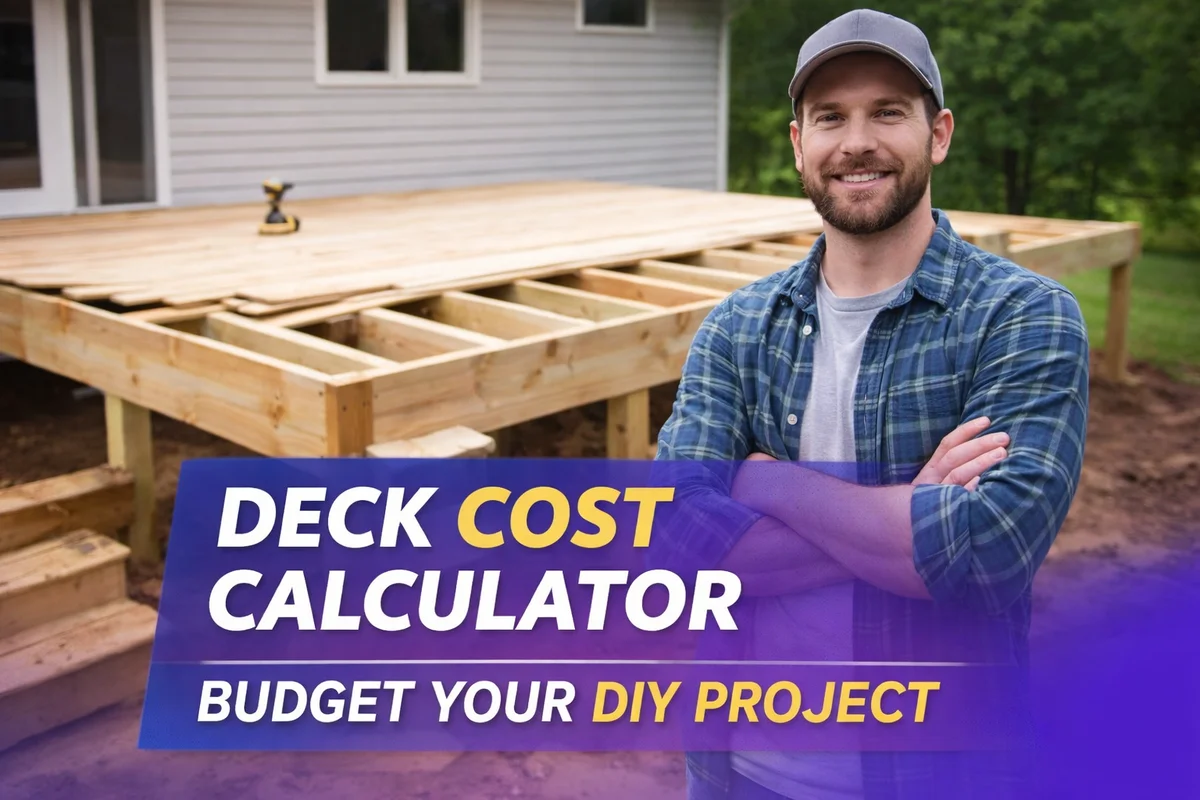
Most decking "trend" articles are basically a slideshow of pretty photos with zero budgeting reality.
Here's what's actually hot right now in decking projects — the stuff I keep seeing in real plans, real bids, and real homeowner decisions.
And yes, I'm going to say the quiet part out loud: the hottest trend isn't a board color.
It's low-maintenance outdoor living — decks being treated like *an extra room* with lighting, zones, rails that look intentional, and materials that don't demand a yearly sanding ritual. The money is moving toward "build it once and enjoy it" — and the market data supports that direction.
For example, Grand View Research pegs the composite railing & decking market at $4.25B in 2024, with growth continuing into 2025 and beyond.
And on the homeowner side, Houzz surveyed 1,106 U.S. homeowners about outdoor/exterior projects — outdoor upgrades aren't slowing down, they're shifting toward more complete "outdoor rooms."
Let's break down the trends by decking type and project style — then talk DIY vs contractor (honestly), then budgeting (the part that actually matters).
The Hottest Decking Trend: "Outdoor Rooms" (Not Just Decks)
If you're wondering why everyone suddenly wants:
- a deck + pergola
- a deck + privacy wall
- a deck + lighting + seating zone
- a deck that "wraps" the back of the house
…it's because decks aren't being sold as a platform anymore. They're being sold as useful space.
That shift is so real that major manufacturers keep talking about "outdoor living" and "conversion away from wood" in their public filings and reports. Trex literally frames growth around repair/remodel conditions and category conversion dynamics.
AZEK describes outdoor living/exteriors as a massive market opportunity in its annual report.
Even the corporate world is basically yelling: "People are putting money outside again."
Trend #1: Composite Dominance (But Smarter, Not Flashier)
Composite isn't "new." What's trending is *how it's being used*:
What's hot
- Wider boards (cleaner look, fewer seams)
- Subtle multi-tone colors (less "plastic uniformity")
- Cooler palettes (because dark boards + full sun = regret)
- Hidden fasteners becoming the default expectation (not an upgrade)
Why it's happening
Homeowners are tired of maintenance. And the composite category keeps growing, with market research consistently pointing to low-maintenance preference as a major driver.
My opinion (based on what holds up):
If you're deciding between "cheap wood now" vs "mid composite now," the long-term satisfaction is usually better with composite — as long as the framing is done right and water can actually drain.
That's the part nobody wants to talk about: a premium deck surface on sloppy framing is still a problem deck.
Trend #2: PVC & "Premium Composite" for High-Moisture Homes
PVC keeps showing up in bids where moisture is the enemy:
- shaded backyards that stay damp
- coastal-ish climates
- homes with lots of tree cover
- pool decks and hot tub platforms
Cost-wise, Angi notes PVC decking commonly falls around $5 to $15 per sq ft for materials (with WPC composites reaching higher), and labor often pricing separately.
Not everyone needs PVC. But when a deck is constantly wet, PVC can be a "buy once, cry once" decision.
Trend #3: Aluminum Decking (Niche, But Rising in the Right Use-Cases)
Aluminum isn't a mainstream homeowner pick — but it's quietly popular in specific situations:
- second-story decks over living space
- fire-resistance concerns
- low-maintenance + long life expectancy priorities
I wouldn't call aluminum "the trend." I'd call it the strategic pick when water management or durability is the priority.
Trend #4: Wood Isn't Dead — It's Just Being Used Differently
Wood is still popular, but it's showing up in two lanes:
Lane A: Pressure-treated builds that prioritize budget
Decks.com lists pressure-treated wood around $3–$6 per sq ft (materials), keeping it a common entry point.
Lane B: Premium woods used as a design feature
Think ipe-style hardwoods or cedar used intentionally for warmth and texture — but those projects succeed only when homeowners accept maintenance or natural weathering.
If someone tells you they want wood because it "ages beautifully," ask one question:
Are you okay with "silver-gray" aging?
Because that's what "beautiful" often means in real life.
What People Are Searching + Building in 2025 (Deck Project Types)
These are the decking-adjacent projects I keep seeing paired with deck builds:
- Deck extensions (keep existing, add a larger zone)
- Wraparound stairs (multiple access points = better flow)
- Picture-frame borders (simple detail that makes the deck look custom)
- Integrated lighting (stairs + under-rail = safety + vibe)
- Privacy walls (especially in tighter neighborhoods)
- Pergolas / shade structures (often added immediately after the deck)
AZEK even highlights product innovation for 2025 tied to outdoor living systems (rails, trim logic, and related platforms).
DIY vs Contractor: The Honest Version
DIY decks can absolutely work. But only under the right conditions.
DIY makes sense when:
- ground-level deck (simple geometry)
- no complicated stairs
- no ledger weirdness
- you're comfortable reading plans, setting elevations, and dealing with inspection requirements
Contractor makes sense when:
- elevated deck (risk goes way up)
- multiple stair runs or landings
- complex railing layouts
- waterproofing / deck-over-living-space
- you want it done fast without weekends disappearing for 2–3 months
Safety + code reality:
Most residential codes require guards when a walking surface is more than ~30 inches above grade, and guard height is commonly 36 inches (jurisdiction dependent). North Carolina's residential code section for wood decks reflects this guard requirement language and thresholds.
The IRC 2024 also includes guard provisions (including stair guard height rules).
So if your deck is elevated: DIY isn't just "harder." It's a liability and safety project. That's where I see the biggest mistakes.
Budgeting: What Actually Drives Deck Cost (Not Just the Boards)
Most homeowners focus on board price and miss the real cost drivers:
1) Size + height
A tall deck costs more because structure and stairs cost more. Always.
2) Framing quality
Overbuilt framing isn't wasted money. It's stability, fewer squeaks, fewer bounce complaints. Need help estimating framing? Use our [Framing Calculator](https://costflowai.com/calculators/framing/).
3) Stairs and rail
Rail is expensive. Stairs are expensive. Corners and angles are expensive.
4) Site prep
Slope, access, demo, hauling—these are the "quiet" costs that show up fast.
5) Footings
Don't forget the foundation. Use our [Concrete Calculator](https://costflowai.com/calculators/concrete/) to estimate footing costs.
For broad national context, Angi's 2025 update notes many professionally built decks fall around $30–$60 per sq ft depending on materials and complexity.
HomeAdvisor also breaks out installed composite ranges and provides material vs installed cost context.
I'll be blunt: if someone gives you a single lump-sum number without describing stairs, rail, height, framing, and demo… you don't have a price. You have a guess.
Quick Reference: Material Cost Signals (Materials-Only)
Use this as a directional check when you're sanity-testing bids and shopping boards. Installed cost depends heavily on framing, stairs, rail, and site conditions.
Pressure-treated wood: $3–$6 per sq ft — Lowest upfront cost, simple builds
Composite (WPC): $5–$14 per sq ft — Low maintenance, wide design range
PVC decking: $5–$15 per sq ft — High moisture areas, premium low-maintenance
Exotic hardwoods (e.g., ipe): $10–$20 per sq ft — High-end look, high effort install
If you want installed ranges, use the calculator — that's where size, rail, stairs, and labor reality get captured.
The "Most Missed" Decking Decision: Drainage + Airflow
This is the part I wish more homeowners obsessed over.
Deck boards can be premium. Fasteners can be perfect. But if water can't drain and the framing stays wet, the deck will age badly no matter what surface you chose.
If your yard stays damp or shaded, prioritize:
- airflow under the deck
- proper joist spacing for your board type
- correct flashing at the ledger
- clean water path away from the house
That's not sexy — but it's what separates a deck that still feels solid after 8 years from a deck that starts complaining in year 2.
Get a Real Deck Budget (Not a Guess)
Deck pricing swings because every project is a snowflake: size, height, stairs, rail, material tier, demo, and local labor.
That's exactly why we built the CostFlowAI Deck Calculator — to turn your project into a real budget framework you can actually use.
[Use the Deck Calculator →](https://costflowai.com/calculators/deck/)
It's the fastest way to:
- estimate material + labor ranges by scope
- plan upgrades (stairs, rail, lighting, pergola) without losing control
- compare DIY vs contractor budgets using the same assumptions
- avoid getting blindsided halfway through design
If you only do one thing before collecting bids, do this: run the calculator first so you know what "normal" looks like for your deck.
Related Articles
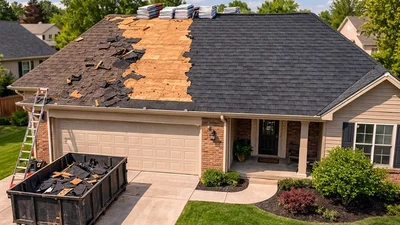
Roofing Costs in 2026: $4–$30/SF Installed (Real Numbers by Material)
Roof replacement costs $4–$30/SF installed in 2026 depending on material. A construction PM breaks down pricing, tariff impact, and what belongs on every roofing bid.

How the 2026 Energy Crisis Is Affecting U.S. Construction Material Prices
The Strait of Hormuz crisis is driving up diesel, steel, asphalt, and concrete costs across U.S. construction. Here's what the data shows and what to do now.

How to Read a Contractor's Estimate (And Catch What's Missing)
A construction PM explains every section of a contractor's estimate — line items, red flags, allowances, and how to compare bids before you sign.
Explore More Construction Calculators
Get instant, accurate cost estimates for your next project.
Try the Deck Calculator