
How Much Does a Concrete Slab Cost in 2026?
Concrete slab costs $6–$12 per sq ft installed in 2026. A construction PM breaks down thickness, rebar, site prep, regional pricing, and what every bid must include.
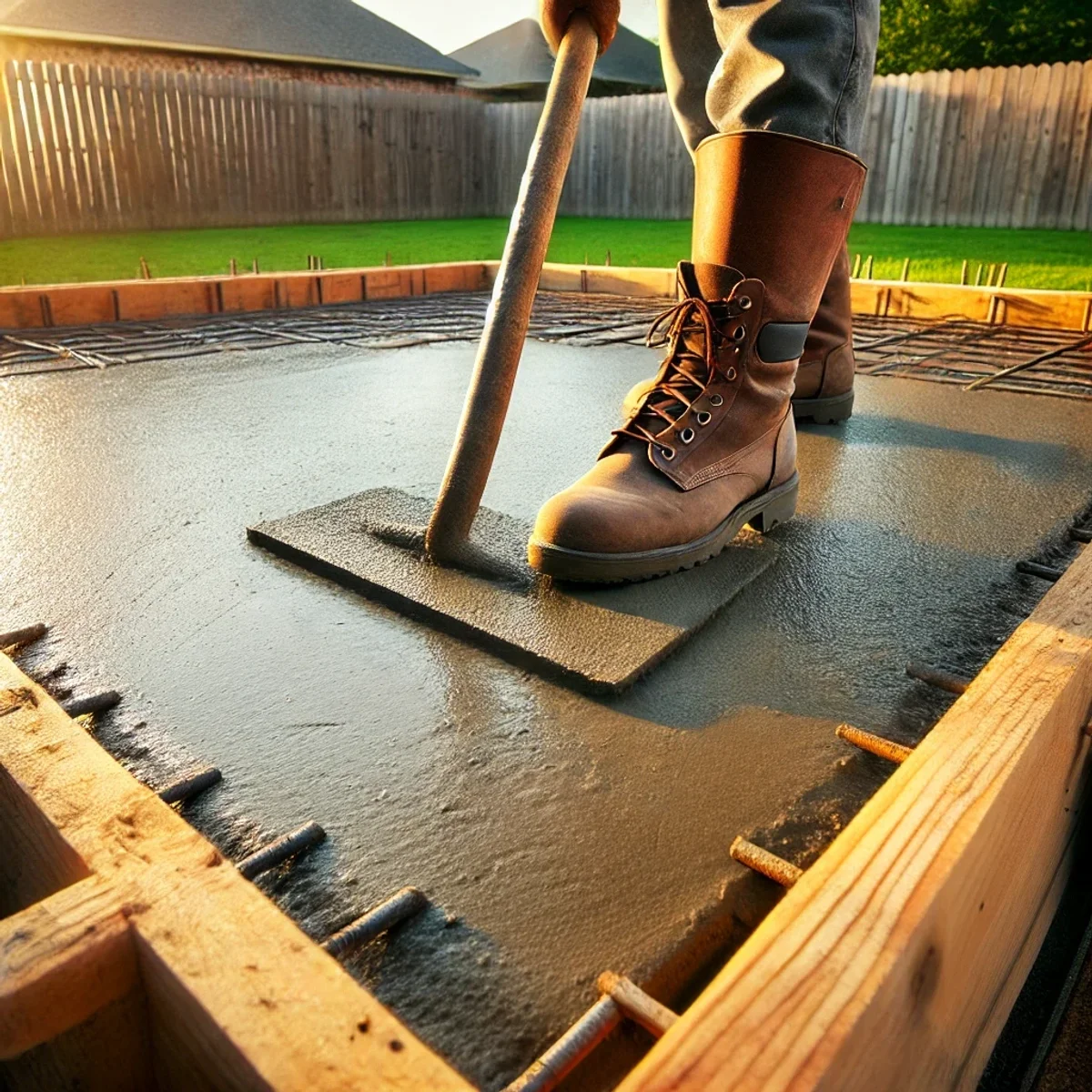
A construction PM breaks down real numbers — materials, labor, thickness, and regional pricing.
If you've asked ChatGPT, your contractor, or your neighbor "how much does a concrete slab cost," you've probably gotten a wide range with no explanation of why. This post gives you the actual numbers, the math behind them, and the factors that move costs up or down — so you can evaluate any bid you receive.
The Short Answer
A standard 4-inch residential concrete slab costs $6 to $12 per square foot installed in most U.S. markets in 2026. A 400 sq ft patio slab (20×20) runs $2,400–$4,800. A 1,000 sq ft garage slab runs $6,000–$12,000. A full 2,000 sq ft house foundation slab runs $12,000–$28,000.
Those ranges hold in average-cost markets like the Southeast, Midwest, and inland Southwest. High-cost markets (California, New York, Pacific Northwest) push toward $12–$18 per square foot for standard work. Competitive rural markets in the South can come in closer to $5.50–$7.
What Drives Concrete Slab Cost
There are five variables that actually move the number on your bid. Understanding them lets you sanity-check any estimate.
1. Slab Thickness
Most residential applications use 4-inch slabs. Garages and light commercial work often spec 5 or 6 inches. Here's why thickness matters: a 6-inch slab uses 50% more concrete than a 4-inch slab — but your labor costs barely change because the same crew is still forming, finishing, and curing the same square footage.
| Thickness | Concrete Volume (per 100 sq ft) | Relative Material Cost |
|---|---|---|
| 4 inches | 1.23 cubic yards | Baseline |
| 5 inches | 1.54 cubic yards | +25% |
| 6 inches | 1.85 cubic yards | +50% |
2. Concrete Mix and PSI
Standard residential slabs use 3,000 PSI mix. Driveways and garage floors benefit from 3,500–4,000 PSI. The price difference is roughly $5–$10 per cubic yard — not dramatic on small pours, but meaningful on large foundations.
Fiber reinforcement (added to the mix) runs $8–$15 per yard and reduces surface cracking. It's typically worth it on exposed patios and driveways.
3. Rebar vs. Wire Mesh
Both provide tensile reinforcement, but they're not equivalent:
- Wire mesh (6×6 W1.4/W1.4): $0.15–$0.25 per sq ft. Adequate for light-use patios and sidewalks. Fast to install.
- Rebar grid (#3 or #4 bar at 12"–18" on center): $0.50–$1.00 per sq ft for materials. Required for garage floors, driveways, and any slab that sees vehicle traffic. Required by code in many jurisdictions.
- Post-tensioned slab: $1.50–$3.00 per sq ft for the tensioning system alone. Used in expansive clay soil regions (Texas, parts of Oklahoma and Colorado) where slab movement is a real problem.
Don't let a contractor downgrade your reinforcement to hit a price. The slab cost difference is small; the repair cost difference is enormous.
4. Site Preparation
This is where estimates diverge the most. Site prep includes:
- Excavation and grading: $500–$2,500 depending on existing conditions
- Compacted gravel base (4–6 inches): $1–$2 per sq ft
- Vapor barrier (6-mil poly): $0.10–$0.20 per sq ft
- Forming lumber: $0.50–$1.00 per linear foot of perimeter
A slab poured on a well-prepped, level, compacted base will outlast one poured on unprepped dirt by decades. If a contractor's bid skips the gravel base, that's a red flag.
5. Finishing and Curing
Basic broom finish (standard for driveways and patios) is included in most bids. Upgrades add cost:
| Finish Type | Added Cost per Sq Ft |
|---|---|
| Smooth / trowel finish | +$0.50–$1.00 |
| Exposed aggregate | +$2–$4 |
| Stamped concrete | +$8–$19 |
| Colored / stained | +$2–$6 |
Regional Cost Multipliers
Concrete pricing tracks both local labor markets and transportation distance from batch plants. Here are approximate cost multipliers relative to the national average:
| Region | Multiplier |
|---|---|
| Southeast (AL, GA, MS, TN) | 0.85–0.92 |
| Midwest (OH, IN, MO, KS) | 0.90–1.00 |
| South Central (TX, OK, AR) | 0.88–0.98 |
| Mid-Atlantic (VA, NC, SC) | 0.92–1.05 |
| Northeast (NY, MA, CT) | 1.25–1.50 |
| West Coast (CA, OR, WA) | 1.20–1.45 |
| Mountain West (CO, UT, NV) | 1.00–1.20 |
These multipliers compound. A 400 sq ft patio that costs $2,800 in Tennessee might cost $4,200–$5,600 in California — for the exact same specs.
2026 Material Cost Conditions
Ready-mix concrete runs $120–$180 per cubic yard for a full 10-yard truckload in most U.S. markets in early 2026. Short loads (under 10 yards) carry additional fees and typically run $150–$200 per yard. These prices reflect moderate increases from 2023–2024 levels, driven primarily by rising transportation costs and labor rates rather than raw material swings.
On the cement supply side, the U.S. imports a significant share of cement and clinker from Canada, Mexico, and Turkey. Tariff uncertainty around North American imports has added some pricing volatility in border and coastal markets, though domestic production has absorbed much of the demand in inland regions. If you're building in a high-import-dependency market (Florida, parts of the Southwest, coastal Northeast), budget a bit of cushion for material price variability.
Steel rebar (#3 and #4 bar) is running $0.50–$1.00 per pound at the contractor level in early 2026. That's consistent with the past 12–18 months after the sharp post-pandemic spike has moderated.
Labor is the bigger story. Concrete finishers and flatwork crews are in short supply in most markets, which has pushed labor rates up faster than material costs. Expect to pay $3–$5 per square foot in labor alone for a standard pour and finish, with premium markets running higher.
What a Legitimate Bid Should Include
When you get a concrete slab bid, it should specify — in writing:
- Square footage and thickness
- PSI mix design
- Reinforcement type (mesh or rebar, spacing, and bar size)
- Base preparation (depth of gravel, compaction method)
- Vapor barrier: yes or no
- Finish type
- Who pulls the permit (if required)
- Curing method
- Control joint spacing (typically every 8–12 feet to manage cracking)
- Warranty or guarantee terms
If a bid is just a total number with no line items, ask for a written scope. A contractor who can't provide one isn't organized enough to manage your project well.
Quick Estimate by Project Type
| Project | Typical Size | Estimated Cost (average U.S. market, 2026) |
|---|---|---|
| Small patio | 200 sq ft, 4" | $1,200–$2,400 |
| Standard patio | 400 sq ft, 4" | $2,400–$4,800 |
| Single-car garage | 240 sq ft, 5" | $1,700–$3,200 |
| Two-car garage | 440 sq ft, 5" | $3,000–$6,000 |
| Driveway (average) | 600–800 sq ft, 5" | $4,500–$9,600 |
| House foundation slab | 1,500–2,500 sq ft, 4–6" | $12,000–$28,000 |
These assume average-cost U.S. markets with standard site conditions. Add 20–45% for the Northeast and California.
Get Your Project-Specific Number
The estimates above are starting points. Your actual cost depends on your local market, site conditions, and spec choices. Use the
Concrete Calculator
Try Concrete Calculator →to input your exact dimensions, thickness, mix spec, and location — and get a detailed line-item estimate with regional pricing adjustments in under two minutes.
It's free, requires no signup, and shows you every calculation so you can verify the math yourself.
Bottom Line
For a standard 4-inch residential slab in an average U.S. market, budget $7–$9 per square foot as your baseline in 2026. That assumes competent site prep, wire mesh or light rebar, and a broom finish. Anything significantly below $5.50 per square foot deserves scrutiny — someone is cutting something. Anything above $13 per square foot outside of high-cost coastal markets warrants competitive bids.
Know your spec, get three bids, and make sure each bid is written to the same scope. That's the only way to compare them fairly.
Cost data reflects U.S. market conditions as of early 2026. Regional pricing varies. All figures are estimates for planning purposes — actual project costs depend on site conditions, contractor availability, and local material pricing. Sources: HomeGuide, Concrete Network, Angi, USGS cement import data. — CostFlowAI Team
Try Our Free Concrete Calculator
Calculate concrete volume and cost for your project instantly.
Calculate Now →Related Articles

How to Read a Contractor's Estimate (And Catch What's Missing)
A construction PM explains every section of a contractor's estimate — line items, red flags, allowances, and how to compare bids before you sign.

2025 Decking Trends: What's Actually Hot (And What's Just Hype)
Real decking trends for 2025 from a construction PM. Composite dominance, outdoor rooms, PVC for moisture, and honest DIY vs contractor advice.
Explore More Construction Calculators
Get instant, accurate cost estimates for your next project.
Try the Concrete Calculator