
Concrete Costs in 2025: What Every Homeowner and Contractor Should Know
Current concrete pricing ranges from $135-$185 per cubic yard, with installed costs of $6-$14 per square foot. Learn what drives these costs and how to estimate accurately for your project.
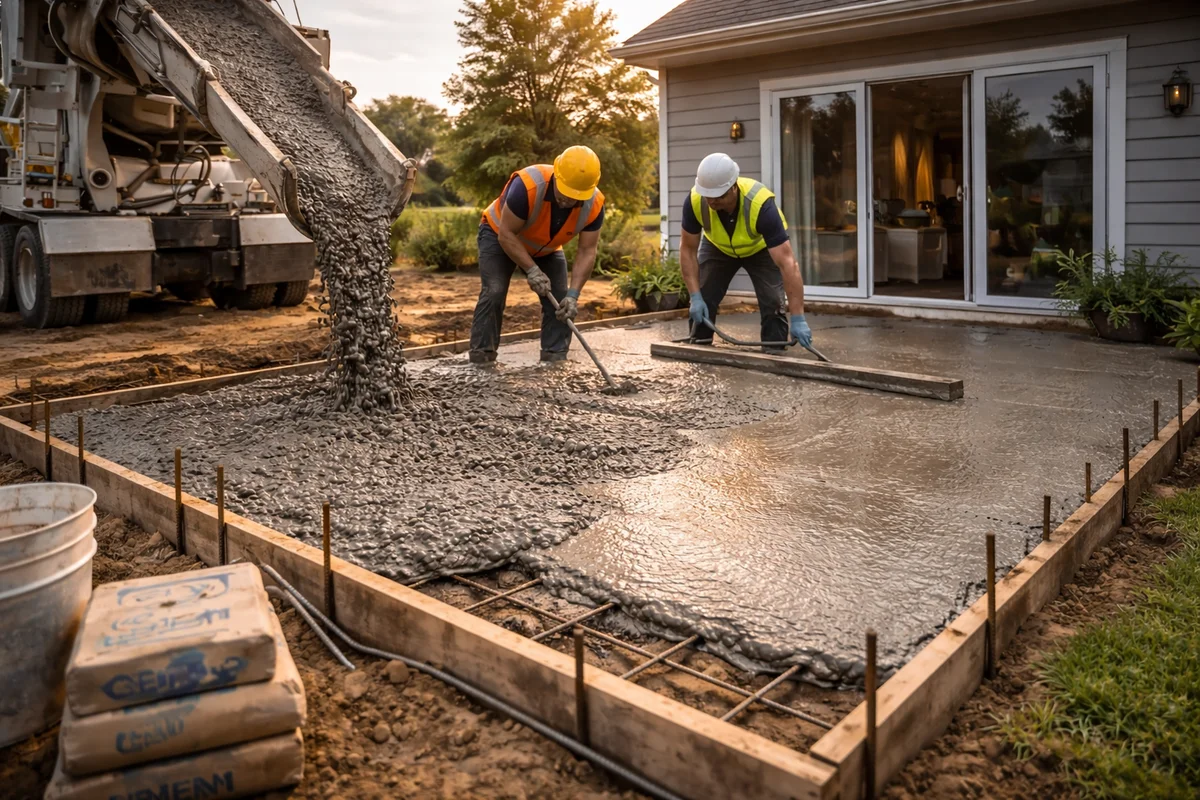
Concrete Costs in 2025: What Every Homeowner and Contractor Should Know
Whether you're planning a new driveway, patio, or foundation, understanding concrete costs is essential for accurate budgeting. Prices have shifted significantly since 2023, and knowing what to expect helps you avoid surprises and evaluate contractor bids effectively.
Current Concrete Pricing (2025)
Ready-mix concrete currently ranges between $135 and $185 per cubic yard for standard residential mixes. In high-demand metropolitan areas during peak construction season, prices can exceed $200 per cubic yard.
Installed Cost Ranges by Project Type
| Project Type | Cost per Sq Ft | Typical Project Cost |
|---|---|---|
| Basic slab (4") | $6–$10 | $2,400–$4,000 (400 sq ft) |
| Driveway | $8–$14 | $3,200–$7,000 (400 sq ft) |
| Patio | $7–$12 | $1,400–$3,600 (200 sq ft) |
| Sidewalk | $6–$10 | $600–$1,500 (100 sq ft) |
| Foundation | $10–$16 | $8,000–$16,000 (1,000 sq ft) |
These ranges include labor, finishing, and standard site preparation. Complex projects with decorative finishes, colored concrete, or stamped patterns add $2–$6 per square foot.
Why Concrete Prices Remain Elevated
Several structural factors keep concrete costs above pre-2022 levels:
Limited Production Capacity: Cement plants operate near maximum capacity, with few new facilities planned. The Portland Cement Association reports domestic production hasn't kept pace with construction demand.
Transportation Costs: Concrete is heavy and time-sensitive. Fuel costs, driver wages, and the 90-minute delivery window from batch plant to pour site all affect pricing. Projects more than 20 miles from a batch plant may incur $50–$100 surcharges.
Labor Market Pressures: Experienced concrete finishers command $25–$45 per hour depending on region, up 15–20% from 2021 levels.
Energy-Intensive Manufacturing: Cement production requires significant energy input. While natural gas prices have moderated, electricity costs continue rising in most regions.
Regional Cost Variations
Concrete pricing varies significantly by location:
| Region | Cost Adjustment | Example (4" slab) |
|---|---|---|
| Northeast | +15–25% | $7–$12/sq ft |
| West Coast | +20–35% | $8–$14/sq ft |
| Southeast | Baseline | $6–$10/sq ft |
| Midwest | -5–10% | $5.50–$9/sq ft |
| Mountain West | +10–15% | $6.50–$11/sq ft |
Urban areas typically run 10–20% higher than rural locations due to permitting requirements, traffic logistics, and higher labor costs.
How to Estimate Concrete Volume
Getting the right amount of concrete is critical—too little means an emergency order at premium prices, too much means paying for material you can't use.
Basic Volume Formula
Length (ft) × Width (ft) × Depth (ft) ÷ 27 = Cubic yards
For a 4-inch thick slab:
- 20 ft × 20 ft × 0.33 ft = 132 cubic feet
- 132 ÷ 27 = 4.9 cubic yards
Always Add a Waste Factor
Standard practice is to order 10–15% extra:
- Flat work (slabs, driveways): 10%
- Steps and irregular shapes: 15%
- Foundations with complex footings: 15–20%
For our 4.9 cubic yard example, ordering 5.5 cubic yards provides adequate buffer without excessive waste.
Common Estimation Mistakes
Underestimating depth variations: Subgrade irregularities mean actual depth often exceeds planned depth by 0.5–1 inch. On a 400 sq ft project, this adds 0.4–0.8 cubic yards.
Forgetting reinforcement displacement: Rebar and wire mesh displace concrete volume. While minimal for residential work, it matters for heavily reinforced commercial projects.
Ignoring delivery minimums: Most ready-mix suppliers require minimum orders of 1–3 cubic yards. Small project shortfalls may require expensive bag mix from home improvement stores ($5–$7 per 80-lb bag, equivalent to $135+ per cubic yard when mixed).
Getting Accurate Contractor Bids
When comparing concrete contractor quotes, ensure each bid includes:
- Concrete specification: PSI rating (3000 PSI standard, 4000 PSI for driveways with heavy vehicles)
- Site preparation: Excavation, grading, compacted gravel base
- Forming and reinforcement: Lumber for forms, wire mesh or rebar
- Finishing: Type of finish (broom, smooth, exposed aggregate)
- Curing and sealing: Whether protective sealant is included
The lowest bid often excludes items competitors include. A $500 difference may disappear once you add the "extras" listed separately.
Frequently Asked Questions
How long does concrete take to cure? Concrete reaches 70% strength in 7 days and full strength in 28 days. Light foot traffic is typically safe after 24–48 hours; vehicle traffic should wait 7 days minimum.
Can I pour concrete in cold weather? Yes, but it requires precautions. Below 50°F, concrete cures slowly and may not reach design strength. Below 32°F, water in the mix can freeze, causing permanent damage. Cold-weather pours add $1–$3 per square foot for blankets, heating, and special mix designs.
Should I seal my concrete? Sealing extends concrete life significantly, especially for driveways and patios exposed to weather. Plan for $0.50–$1.50 per square foot for professional sealing, applied after 28 days of curing.
Next Steps
Use our Concrete Calculator to estimate materials for your specific project. Enter your dimensions and get instant volume calculations with appropriate waste factors built in.
For projects over $5,000, we recommend getting at least three contractor bids and checking references for similar completed work.
Try Our Free Concrete Calculator
Calculate concrete volume and cost for your project instantly.
Calculate Now →Related Articles
 Featured
Asphalt Paving Costs in 2025: Driveway and Parking Lot Pricing Guide
Asphalt paving costs $3-$7 per square foot installed, with driveways averaging $4,500-$9,000. Learn what affects pricing and how to plan your paving project.
 Featured
Framing Costs in 2025: Lumber Pricing and Structural Construction Guide
Framing costs $7-$16 per square foot, with lumber prices stabilizing after 2021-2022 volatility. Learn what affects structural framing costs for your building project.
 Featured
Flooring Costs in 2025: Installation Pricing by Material Type
Flooring installation costs $3-$25 per square foot depending on material. Learn pricing for hardwood, tile, laminate, and carpet to budget your project accurately.
Explore More Construction Calculators
Get instant, accurate cost estimates for your next project.
Try the Concrete Calculator