
Fence Installation Costs in 2025: Material and Labor Pricing Guide
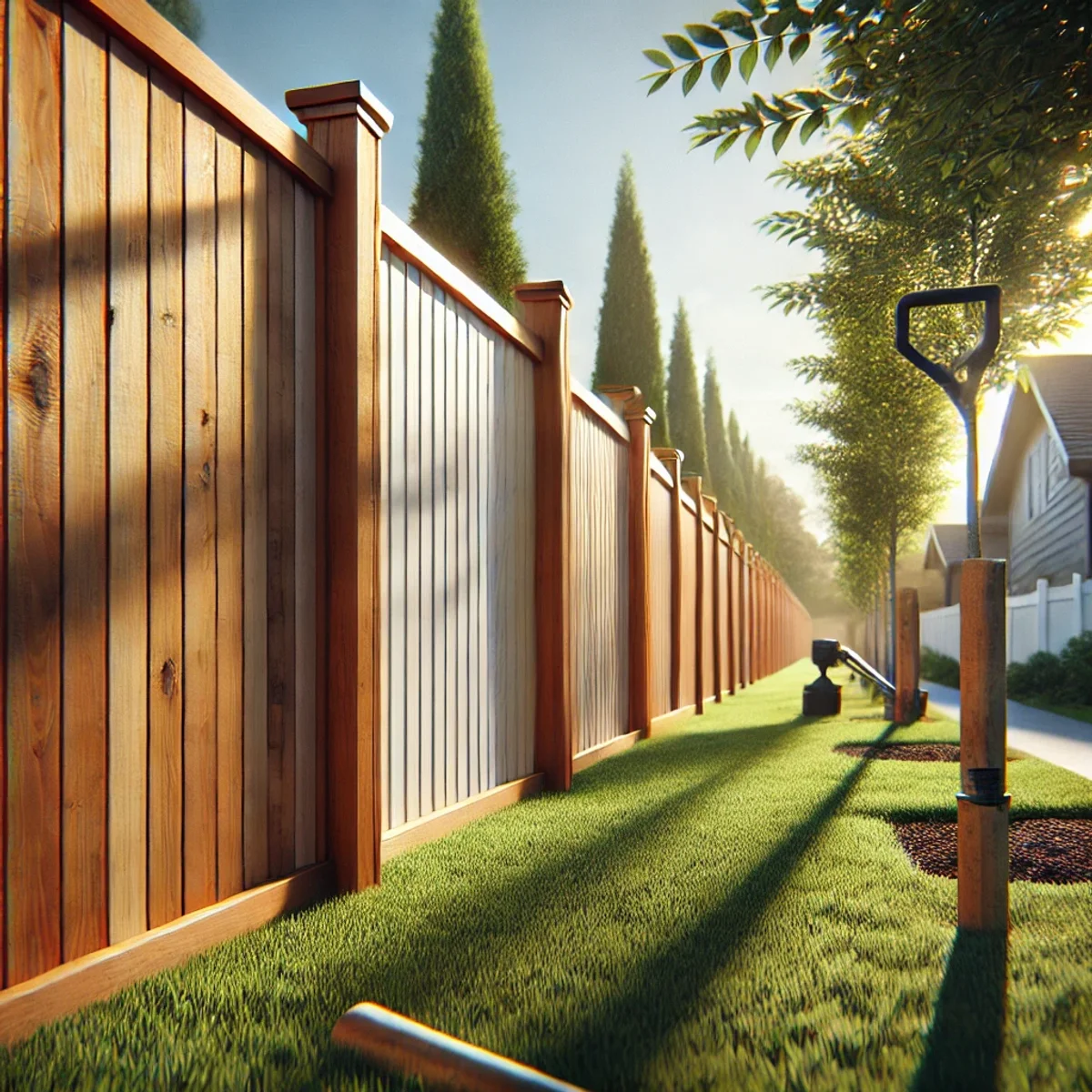
Fence installation costs $15-$75 per linear foot depending on material. A 150-foot privacy fence typically runs $3,000-$8,000. Learn what affects pricing for your property.
Fence Installation Costs in 2025: Material and Labor Pricing Guide
A quality fence adds privacy, security, and property value—but costs vary dramatically based on material choice, height, and terrain. Understanding pricing helps you choose the right fence for your budget and property needs.
Current Fence Pricing (2025)
Cost by Material Type
| Material | Cost per Linear Foot | 150 ft Fence | Lifespan |
|---|---|---|---|
| Chain link | $15–$30 | $2,250–$4,500 | 20+ years |
| Wood (pine) | $20–$35 | $3,000–$5,250 | 15–20 years |
| Wood (cedar) | $25–$45 | $3,750–$6,750 | 20–25 years |
| Vinyl/PVC | $25–$50 | $3,750–$7,500 | 25–30 years |
| Aluminum | $30–$60 | $4,500–$9,000 | 30+ years |
| Composite | $35–$70 | $5,250–$10,500 | 25–30 years |
| Wrought iron | $50–$100+ | $7,500–$15,000+ | 50+ years |
These prices include materials and professional installation. DIY installation can reduce costs 30–50% but requires proper tools and technique.
Height Impact on Cost
| Height | Cost Multiplier | Common Use |
|---|---|---|
| 4 feet | Base price | Decorative, pet containment |
| 6 feet | 1.3–1.5× | Privacy, security |
| 8 feet | 1.8–2.2× | Maximum privacy, commercial |
Standard privacy fences are 6 feet. Taller fences may require permits and setback adjustments in many jurisdictions.
What Affects Fence Costs
Terrain: Flat, clear land is easiest. Sloped yards require stepped or racked panels, adding 15–30% to labor. Rocky soil adds $5–$15 per post for auguring.
Property Lines: Ensure you know exact boundaries. Installing on a neighbor's property creates legal issues; installing inside your line wastes usable space.
Gate Requirements: Each gate adds $150–$800 depending on size and type. A single walk-through gate: $150–$300. Double drive gate: $400–$800.
Removal of Old Fence: Demolition and disposal adds $3–$5 per linear foot. Rotted posts requiring extraction add more.
Permit and Survey Costs: Many areas require fence permits ($50–$200). If boundary location is uncertain, a survey costs $300–$800.
Regional Cost Variations
| Region | Cost Range | Notes |
|---|---|---|
| Northeast | +20–30% | Higher labor costs, shorter season |
| Southeast | Baseline | Competitive market, year-round |
| Midwest | -5–10% | Lower labor costs |
| West Coast | +25–40% | High labor, material transport |
| Mountain West | +10–20% | Variable access, rock challenges |
Material Comparison Guide
Wood Fencing
Pros: Natural appearance, easy repair, paint/stain options Cons: Requires maintenance, susceptible to rot and insects Maintenance: Stain or seal every 2–3 years ($1–$2/linear ft)
Pine: Most affordable, requires immediate treatment Cedar: Naturally rot-resistant, weathers to gray without treatment Redwood: Premium option, excellent durability, limited availability
Vinyl/PVC Fencing
Pros: No painting/staining, won't rot, easy cleaning Cons: Higher upfront cost, limited color options, can crack in extreme cold Maintenance: Occasional washing only
Chain Link Fencing
Pros: Lowest cost, maximum durability, see-through for safety Cons: No privacy (unless adding slats), industrial appearance Privacy slats: Add $3–$5 per linear foot
Aluminum Fencing
Pros: Elegant appearance, no rust, minimal maintenance Cons: Doesn't provide privacy, less secure (easily climbed) Best for: Front yards, pools, decorative applications
How to Calculate Fence Materials
Posts
- One post every 6–8 feet
- Add posts for each corner and gate
- For 150 linear feet: 150 ÷ 8 = 19 posts minimum, plus corners
Panels/Pickets
For pre-built panels (typically 8 ft wide):
- 150 ÷ 8 = 19 panels
For individual pickets (6" wide):
- Pickets per linear foot: 12 ÷ 6 = 2 pickets
- 150 feet × 2 = 300 pickets (add 10% for waste)
Concrete
Each post typically requires 1–2 bags of concrete (50 lb bags):
- 19 posts × 2 bags = 38 bags minimum
DIY vs. Professional Installation
Good DIY candidates:
- Flat yards with soft soil
- Wood or chain link fencing
- Simple straight runs
- Property owners with post hole digger or auger rental
Hire a professional for:
- Sloped or rocky terrain
- Vinyl, aluminum, or composite materials
- Complex layouts with multiple gates
- Property line uncertainty
DIY savings: 30–50% of installed cost DIY time investment: 2–4 days for 150 feet (two people) Risk: Improper installation leads to leaning, sagging, or property line disputes
Frequently Asked Questions
Do I need a permit for a fence? Most jurisdictions require permits for fences over 4–6 feet. Check setback requirements—fences often can't be built directly on property lines or within certain distances of roads.
Which side faces out—mine or my neighbor's? By convention, the "good side" (finished side without post visibility) faces outward. Some areas have laws requiring this. Discuss with neighbors before installation.
How deep should fence posts be? Standard rule: 1/3 of post length underground, minimum 24 inches. For 6-foot fence with 8-foot posts, 24–30 inches deep with 6 inches of gravel base.
How long does fence installation take? Professional crew: 1–2 days for 150–200 feet DIY: 2–4 days depending on experience and soil conditions
Next Steps
Use our Fence Calculator to estimate materials and costs for your specific property dimensions and material choice.
Before starting, call 811 for free utility locating service—hitting buried lines creates serious safety hazards and repair costs.
Related Articles
 Featured
Asphalt Paving Costs in 2025: Driveway and Parking Lot Pricing Guide
Asphalt paving costs $3-$7 per square foot installed, with driveways averaging $4,500-$9,000. Learn what affects pricing and how to plan your paving project.
 Featured
Framing Costs in 2025: Lumber Pricing and Structural Construction Guide
Framing costs $7-$16 per square foot, with lumber prices stabilizing after 2021-2022 volatility. Learn what affects structural framing costs for your building project.
 Featured
Concrete Costs in 2025: What Every Homeowner and Contractor Should Know
Current concrete pricing ranges from $135-$185 per cubic yard, with installed costs of $6-$14 per square foot. Learn what drives these costs and how to estimate accurately for your project.
Explore More Construction Calculators
Get instant, accurate cost estimates for your next project.
Try the Fence Calculator