
How to Read a Contractor's Estimate (And Catch What's Missing)
A construction PM explains every section of a contractor's estimate — line items, red flags, allowances, and how to compare bids before you sign.

What every line-item means, what should always be there, and the red flags that cost homeowners thousands.
Most homeowners get a contractor estimate, see the total number, and either accept it or try to negotiate it down. That's the wrong way to read an estimate — and it's how people end up in disputes, cost overruns, and half-finished projects.
This guide teaches you to read an estimate the way a construction PM reads one: line by line, looking for what's there, what's not there, and what's vague on purpose.
What a Professional Estimate Actually Is
A contractor estimate (also called a bid, proposal, or quote depending on the contractor) is a written projection of what your project will cost. At minimum, it should tell you:
- What work is included (the scope)
- What materials will be used (specs)
- What the labor cost is (hours or lump sum)
- What's excluded (just as important as what's included)
- How long it will take
- Payment terms
An estimate is not a contract — but a signed contract should reference or incorporate the estimate. If your estimate is vague, your contract will be vague. Vague contracts are where change orders and disputes are born.
The Anatomy of a Legitimate Estimate
Here's what you should see in a well-written contractor estimate, broken down section by section.
1. Project Description and Scope
The first section should describe the project in plain language with enough specificity to be unambiguous. Compare these two:
Vague: "Install new roof"
Specific: "Remove and dispose of existing 2 layers of asphalt shingles. Install new 30-year architectural shingles (GAF Timberline HDZ, charcoal), 15-lb felt underlayment, 2-inch drip edge, and step flashing at all penetrations. Re-flash chimney with lead flashing. Replace 4 damaged decking boards. Includes haul-away and disposal."
The specific version tells you what's getting torn off, what's going on, what brand and model, what's included in the cleanup. If there's a dispute later, you have something to point to.
2. Material Line Items
Materials should be listed separately from labor wherever possible. This matters for two reasons: first, it lets you verify you're getting what you're paying for; second, it protects you if material costs change and you need to understand what's driving a price increase.
For each material, a good estimate includes:
- Quantity (e.g., 24 squares of shingles, not "enough shingles")
- Specification (brand, model, grade, size)
- Unit cost (what you're paying per unit)
- Extended cost (quantity × unit)
If a contractor just lists "materials: $8,400" with no breakdown, ask for itemization. They should have it — any contractor who's been in business more than a year is working from a material takeoff.
3. Labor Line Items
Labor should be separated from materials in the estimate. This lets you understand what you're paying for skill and time versus what you're paying for product.
Labor can be presented as:
- Lump sum per trade (e.g., "Framing labor: $14,500")
- Hourly rate with estimated hours (e.g., "Electrician: 40 hours at $95/hour = $3,800")
- Per-unit pricing (e.g., "Drywall installation: $1.85/sq ft for 1,200 sq ft = $2,220")
All three formats are legitimate. What you want to avoid is a single line that says "labor and materials: $22,000" — because if something goes wrong, there's no baseline to reason from.
4. Subcontractors
General contractors often subcontract specialized work — electrical, plumbing, HVAC, concrete, roofing. Each subcontractor scope should be listed separately in the estimate, even if it's a pass-through line item. You want to know:
- Which trades are subcontracted
- What the sub's scope includes
- Whether the GC is marking up the sub cost (standard practice is 10–20%)
A GC who hides subcontractor costs in a lump sum isn't necessarily dishonest, but you have no visibility into whether they got competitive sub bids — and that's your money.
5. Permits and Inspections
Permits should always be a named line item. They should not be buried in overhead or "miscellaneous." Most jurisdictions require permits for structural, electrical, plumbing, and HVAC work. The permit fee varies by municipality — anywhere from $150 for a small electrical permit to $2,500+ for a full addition.
Who pulls the permit matters: the licensed contractor of record should pull it. If a contractor tells you to pull your own permit, that's a major red flag — it shifts liability to you and may void your homeowner's insurance coverage.
6. Allowances
An allowance is a placeholder dollar amount for something that hasn't been specified yet — usually finish materials like fixtures, tile, or appliances. For example: "Tile allowance: $3.50/sq ft."
Allowances are not estimates. If you spend more than the allowance, the difference comes out of your pocket as a change order. Common allowances:
- Flooring (per sq ft)
- Plumbing fixtures (per fixture)
- Lighting fixtures (per fixture)
- Cabinetry (lump sum)
- Appliances (lump sum)
Before signing, make sure you understand what the allowance actually covers. A $500 fixture allowance per bathroom sounds fine until you realize the fixtures you want cost $350 each.
7. Exclusions
The exclusions section is where estimators legally protect themselves — and where homeowners often get surprised. Common exclusions include:
- Unforeseen conditions (rot, mold, structural damage found during demo)
- Hazardous material removal (asbestos, lead paint)
- Work outside the property line
- Engineering or architectural fees
- HOA approval costs
- Landscaping restoration after utility work
- Temporary power or portable toilets (on larger projects)
Read every exclusion. If something you expect to be included isn't on the estimate and isn't named as excluded — ask. The answer will tell you a lot about the contractor's communication style.
8. Contingency
Reputable contractors building complex projects will include a contingency line to cover unforeseen conditions. If you see this, it's actually a good sign: it means the contractor is being transparent about uncertainty rather than hiding it in inflated unit prices. Typical ranges:
- New construction / straightforward projects: 5–10%
- Remodels involving demo or existing unknown conditions: 10–20%
On simple projects (a new patio, a roof replacement on a sound structure), a contingency line isn't standard. On anything involving demo, remodeling existing conditions, or work underground, ask what happens when something unexpected is found.
9. Payment Schedule
The payment schedule belongs in the estimate (and definitely in the contract). Standard residential construction payment terms:
- Deposit: 10–25% of total contract value at signing
- Progress payments: Tied to defined milestones (e.g., foundation complete, framing complete, rough-ins complete)
- Final payment: 10–15% held until substantial completion and punch list sign-off
As a general rule, upfront deposits scale with project size: on small jobs under $20K, 50% upfront is common; on mid-size projects, 25–35% is typical; on large projects over $100K, 10–20% is more standard. Note that some states set legal caps on contractor deposits — California, for example, limits deposits to 10% of the contract or $1,000, whichever is less. Check your state's contractor licensing board before signing. Never make a final payment before the work is complete and you've walked through it yourself.
Red Flags in Contractor Estimates
These aren't disqualifying on their own, but each one deserves a direct question before you sign.
No line-item breakdown. A single lump-sum number with no scope description protects the contractor, not you.
Materials listed without specifications. "New windows" tells you nothing. "Andersen 400 Series double-hung, low-E glass, painted interior" tells you what you're getting.
No permit line item. Either they forgot it, they're planning to skip it, or they expect you to handle it.
Labor and materials not separated. Makes it impossible to evaluate if material prices change or work scope is disputed.
Unusually low bid. A bid 20–30% below all other bids is not a deal — it's a scope gap, a material downgrade, or a contractor who will make it up in change orders. Ask them to explain the difference line by line.
Verbal scope with written total. If the scope was discussed in a meeting but only the total number appears in writing, what was discussed has no legal weight.
"And all associated work" language. This phrase is used to avoid listing what's actually included. Push for specifics.
How to Compare Multiple Bids
When you have three bids in front of you, resist comparing the totals first. Instead:
- Line up the scopes. Do all three bids cover the same work? Often they don't — one contractor includes demo and haul-away, one doesn't. One specs 30-year shingles, one specs 25-year.
- Normalize the specs. Rewrite each bid on a common template with the same scope and same materials. Now you're comparing like to like.
- Check the math. Multiply quantities by unit costs. Arithmetic errors in estimates — whether accidental or intentional — are more common than you'd expect.
- Evaluate the payment schedule. A lower total with aggressive front-loaded payments can be riskier than a higher total with milestone-based payments.
- Now compare totals. With the same scope and specs, the price difference reflects margin, efficiency, and risk tolerance — all of which are legitimate factors.
Use CostFlowAI to Verify the Numbers
Before you accept or reject any bid, run your project through the relevant CostFlowAI calculator. Our calculators produce line-item estimates — materials, labor, waste factors, and regional pricing — using the same methodology contractors use for their takeoffs.
If a contractor's concrete bid says $8,000 for a 400 sq ft garage slab in a mid-cost market, and our concrete calculator shows $2,400–$4,800 for that same spec, you now have a data-driven basis for asking specific questions: Are they including a thick gravel base? Post-tensioning? A premium finish? Or is the bid simply inflated?
The goal isn't to use the estimate to hammer a contractor's price. It's to have an informed conversation — and to know whether the numbers in front of you make sense.
Summary: What You're Looking For
A legitimate estimate gives you enough information to verify the scope, understand the pricing, and hold the contractor accountable throughout the project. It should be specific about materials, honest about exclusions, clear on payment terms, and signed by both parties before any work begins.
Reading an estimate takes 20 minutes if you know what to look for. That 20 minutes protects you from thousands of dollars in surprises — and from the much more expensive problem of a project gone wrong.
Based on construction project management practice and standard residential estimating methodology. — CostFlowAI Team
Try Our Free Concrete Calculator
Calculate concrete volume and cost for your project instantly.
Calculate Now →Related Articles
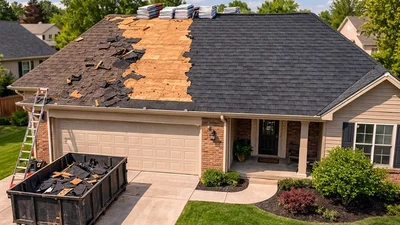
Roofing Costs in 2026: $4–$30/SF Installed (Real Numbers by Material)
Roof replacement costs $4–$30/SF installed in 2026 depending on material. A construction PM breaks down pricing, tariff impact, and what belongs on every roofing bid.

How the 2026 Energy Crisis Is Affecting U.S. Construction Material Prices
The Strait of Hormuz crisis is driving up diesel, steel, asphalt, and concrete costs across U.S. construction. Here's what the data shows and what to do now.

How Much Does a Concrete Slab Cost in 2026?
Concrete slab costs $6–$12 per sq ft installed in 2026. A construction PM breaks down thickness, rebar, site prep, regional pricing, and what every bid must include.
Explore More Construction Calculators
Get instant, accurate cost estimates for your next project.
Try the Concrete Calculator