
Roofing Costs in 2026: $4–$30/SF Installed (Real Numbers by Material)
Roof replacement costs $4–$30/SF installed in 2026 depending on material. A construction PM breaks down pricing, tariff impact, and what belongs on every roofing bid.
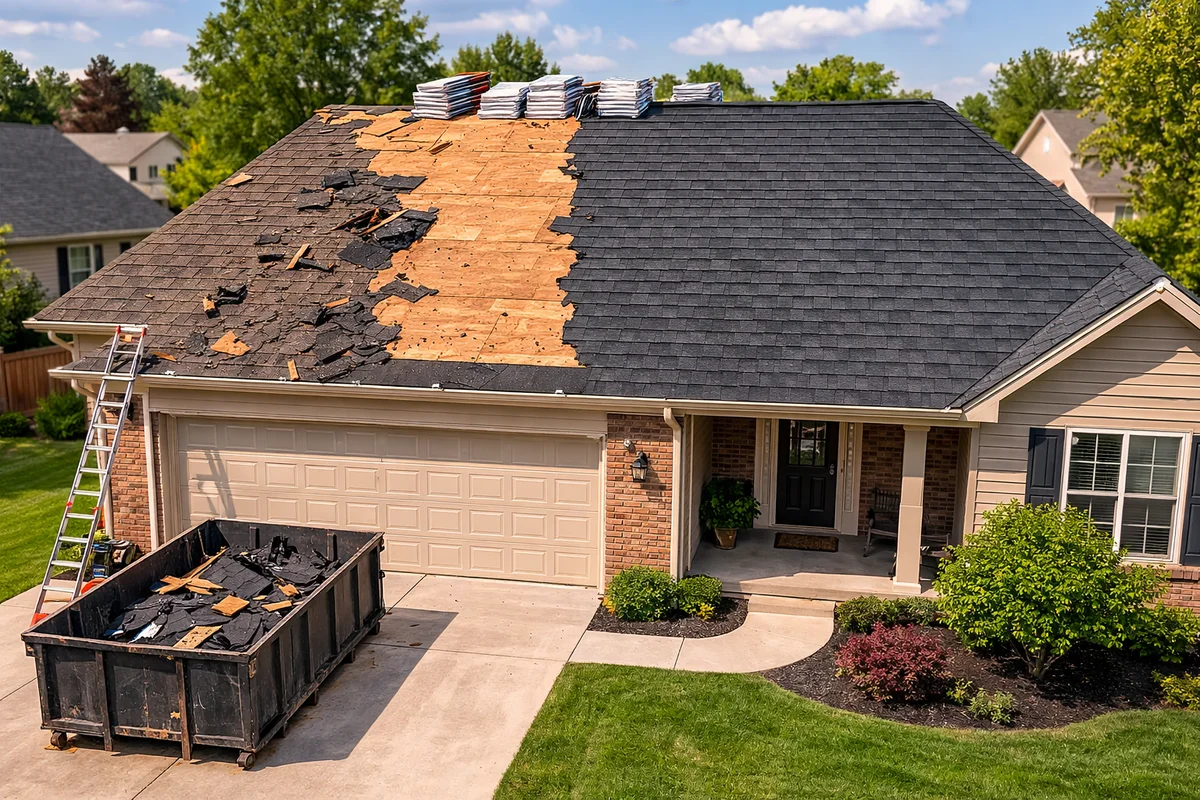
What Does a Roof Replacement Actually Cost in 2026?
Let's start with what matters: installed cost per square foot, which includes materials, labor, tear-off, and disposal. These are the ranges contractors are quoting on standard residential re-roofs as of early 2026:
| Material | Installed Cost/SF | Typical 2,000 SF Home | Lifespan |
|---|---|---|---|
| 3-Tab Asphalt Shingles | $4-$6 | $8,000-$12,000 | 15-20 years |
| Architectural Shingles | $5-$9 | $10,000-$18,000 | 25-30 years |
| Metal Standing Seam | $12-$22 | $24,000-$44,000 | 40-70 years |
| Steel Shingles | $7-$16 | $14,000-$32,000 | 40-60 years |
| Aluminum | $11-$17 | $22,000-$34,000 | 50+ years |
| Clay/Concrete Tile | $10-$25 | $20,000-$50,000 | 50-100 years |
| Copper | $20-$40+ | $40,000-$80,000+ | 100+ years |
A quick reality check: if someone quotes you a "full roof replacement" on a 2,000 SF home for under $6,000 with architectural shingles, something is wrong. Either they're skipping tear-off, using substandard materials, or the scope is incomplete. Always compare apples to apples - which means reading the line items, not just the bottom number.
Why Roofing Material Prices Are Higher in 2026
Two forces are driving roofing costs upward this year, and neither is going away soon.
Tariffs on Metals
Section 232 tariffs on steel and aluminum reached 50% in mid-2025 and remain in effect as of March 2026. The Associated General Contractors of America reported in February 2026 that the Producer Price Index for aluminum mill shapes jumped 33% year-over-year in January, while steel mill products rose 20.7% - the steepest increases since the pandemic-era supply chain disruptions of early 2022. For metal roofing, that translates directly into higher material costs. A standing seam steel roof that might have quoted at $10-$12/SF installed two years ago now starts closer to $12-$15/SF in most markets.
The Commerce Department has also expanded Section 232 coverage to include over 400 derivative product categories — meaning products that contain steel or aluminum, not just raw material imports, are now subject to the 50% tariff. This affects everything from metal flashing and drip edge to prefabricated roof panels.
There is active discussion about potential tariff rollbacks. As a project manager, I tell clients: budget at current tariff levels and treat any rollback as upside, not a reason to delay.
Asphalt and Petroleum-Based Products
Asphalt shingles are tied to petroleum refining byproducts. The BLS Producer Price Index for asphalt paving and roofing materials has stayed elevated since 2022, with the index near record highs through early 2025. While asphalt shingles haven't seen the dramatic spikes that metals have, they're not getting cheaper either. NAHB's January 2026 analysis noted that residential construction input prices have stayed above 3% year-over-year growth since mid-2025.
The bottom line: whether you're going asphalt or metal, 2026 prices are meaningfully higher than 2024, and the most likely near-term trajectory is flat to slightly up - not down.
The Real Metal vs. Shingles Calculation (It's Not What You Think)
The sticker shock on metal roofing leads most homeowners to default to asphalt shingles. That's understandable — a metal roof costs roughly 2-3x more upfront. But the real comparison is total cost of ownership over the life of the home, and the math often flips.
Here's the calculation I walk clients through for a 2,000 SF ranch home with moderate complexity (6/12 pitch, 2 valleys, 1 chimney):
| Metric | Architectural Shingles | Standing Seam Steel |
|---|---|---|
| Installed cost (2026) | $14,000 | $32,000 |
| Expected lifespan | 25 years | 50+ years |
| Replacements over 50 years | 2 installations | 1 installation |
| Total material/labor cost (50 yr) | $28,000+ | $32,000 |
| Maintenance & repairs (est.) | $3,000–$5,000 | $500–$1,500 |
| Energy savings (reflective) | Minimal | $50–$150/yr = $2,500–$7,500 |
| Insurance discount potential | None typical | 5–35% in storm-prone areas |
When you factor in a second shingle roof 25 years from now (at inevitably higher prices), the lifetime cost gap narrows dramatically - and in storm-prone regions where insurance discounts and reduced repair frequency are significant, metal can actually cost less over the ownership period. That said, if you're selling the house in 5 years, the payback period doesn't work. Asphalt shingles are the right call for short-term ownership. Match the material to the timeline.
What a Legitimate Roofing Bid Should Include
This is where having a project management background pays off. A shocking number of roofing bids are vague, incomplete, or deliberately structured to look cheap on paper. Here's what should be on every roofing estimate, line by line:
Scope items that must be explicitly listed
- Tear-off and disposal (specify number of existing layers)
- Dump fees or roll-off dumpster rental
- Underlayment type and coverage (synthetic felt vs. ice-and-water shield)
- Ice and water shield at eaves, valleys, and penetrations (code-required in most jurisdictions)
- Drip edge — both eave and rake (metal, not plastic)
- Starter strip shingles at eaves and rakes - Ridge cap (not field shingles cut and bent — proper ridge cap shingles)
- Pipe boot replacements (every plumbing vent gets a new boot)
- Step flashing at sidewalls and chimneys
- Counter-flashing or re-sealing at chimney
- Ridge vent or equivalent ventilation (balanced intake and exhaust)
- Plywood/OSB replacement if decking is damaged (priced per sheet, not lump sum)
- Cleanup, magnetic nail sweep, and final inspection
Red flags in a roofing bid
- Lump sum pricing with no line items - you have no way to compare or verify
- "Tear-off included" with no mention of disposal or dump fees
- No mention of underlayment or ice-and-water shield
- Pipe boots not listed (a $15 part that prevents thousands in water damage)
- "Lifetime warranty" claims without specifying manufacturer and transferability terms
- Deposit over 30% before work begins — standard is 10–15% for material ordering, or materials delivered to site before any payment
Regional Price Variation: Where You Live Changes Everything
Roofing costs vary by 40–60% depending on geography. This isn't just labor rates — it's climate-driven code requirements, insurance market dynamics, and seasonal demand.
Lower-cost markets (Southeast, Midwest)
Installed costs for architectural shingles typically run $5–$7/SF. Mild weather allows year-round work, and labor competition keeps rates moderate. A full re-roof on a 2,000 SF home commonly falls between $10,000 and $14,000.
Higher-cost markets (Northeast, Pacific Northwest, Mountain West)
Expect $7–$10/SF installed for the same shingle job. Shorter working seasons compress available labor into fewer months. Stricter ice-dam prevention requirements (ice-and-water shield extending 24 inches past the interior wall line per IRC) add $500–$1,500. A full re-roof in these markets typically runs $14,000–$20,000.
Storm-prone markets (Gulf Coast, Tornado Alley, Front Range)
Insurance dynamics distort the market. Hail-prone areas in Texas, Oklahoma, Colorado, and the Carolinas see elevated demand after every storm event, which temporarily spikes contractor prices 15–30%. Enhanced nailing patterns, hurricane clips, and full-deck peel-and-stick underlayment (required in Florida and Gulf Coast communities) add $1,000–$3,000 to the base cost.
2026 Storm Season: What to Do Before You Need a Roof
Peak hail and wind damage season runs March through September, with the worst months typically April through June across the central U.S. If your roof is more than 15 years old or has visible signs of wear - cracked shingles, missing granules in your gutters, curling at the edges - now is the time to act, not after a storm. Several states are launching grant programs in 2026 that can offset the cost of storm-resistant upgrades. Kentucky's Strengthen Kentucky Homes Program offers up to $10,000 for roof upgrades meeting IBHS FORTIFIED standards. Oklahoma expanded its similar program statewide in 2026. Louisiana, Alabama, and North Carolina also have active programs. These programs require state-approved contractors and FORTIFIED certification - check with your state's insurance department for current availability.
Insurance considerations to address now
Many insurers now require a 2% wind/hail deductible, and several carriers are shifting from Replacement Cost Value (RCV) to Actual Cash Value (ACV) payouts on older roofs. If your roof is 15+ years old, your insurance may only pay the depreciated value in a claim - which on a 20-year-old roof could mean 30–40% of replacement cost. Review your policy before storm season, not after. Impact-resistant shingles (Class 4 rated under UL 2218) can reduce insurance premiums in many states. The upfront premium for Class 4 shingles is typically $1.50–$3.00/SF more than standard architectural shingles, but the annual insurance savings — combined with fewer storm-related claims over the roof's life - often make the payback period 3–7 years.
Get Your Roofing Estimate in 60 Seconds
These are planning ranges, not bids. Every roof is different - pitch, complexity, access, existing condition, and local market all influence the final number. Here's the process I recommend:
- Get your measurements. Use our free roofing calculator to input your roof dimensions, pitch, material choice, and state. You'll get an itemized estimate with labor, materials, tear-off, and regional pricing — the same framework a professional estimator uses.
- Get three written bids. Use the calculator output as your comparison benchmark. Any bid that's more than 25% above or below your calculated range deserves a conversation - either they've included something you didn't account for, or they've left something out.
- Read the line items. Don't compare bottom-line numbers. Compare scope. The cheapest bid almost always has the thinnest scope.
Try the Free Roofing Cost Calculator
Try Roofing Calculator →Get your material quantities, labor projections, and total budget range in under 60 seconds. Regional pricing for all 50 states. Full math shown. No signup required.
Data as of March 2026. Cost ranges based on BLS Producer Price Index data, AGC materials analysis, NAHB construction cost reports, and national contractor pricing surveys. All estimates are for planning purposes. Actual costs vary by region, project complexity, and market conditions. Always obtain multiple bids from licensed contractors.
Try Our Free Roofing Calculator
Estimate roofing materials for your project instantly.
Calculate Now →Related Articles

How the 2026 Energy Crisis Is Affecting U.S. Construction Material Prices
The Strait of Hormuz crisis is driving up diesel, steel, asphalt, and concrete costs across U.S. construction. Here's what the data shows and what to do now.

How to Read a Contractor's Estimate (And Catch What's Missing)
A construction PM explains every section of a contractor's estimate — line items, red flags, allowances, and how to compare bids before you sign.
How Much Does a Concrete Slab Cost in 2026?
Concrete slab costs $6–$12 per sq ft installed in 2026. A construction PM breaks down thickness, rebar, site prep, regional pricing, and what every bid must include.
Explore More Construction Calculators
Get instant, accurate cost estimates for your next project.
Try the Roofing Calculator